
Email Marketing: A Powerful Strategy to Grow Your Business
Email marketing is one of the most effective digital marketing strategies for connecting with customers, building strong relationships, and increasing sales. It allows businesses to communicate directly with their target audience through personalized emails, promotional offers, newsletters, and valuable updates.
Whether you run a small business, an e-commerce store, or a digital marketing agency, email marketing can help you reach the right audience and grow your business online.
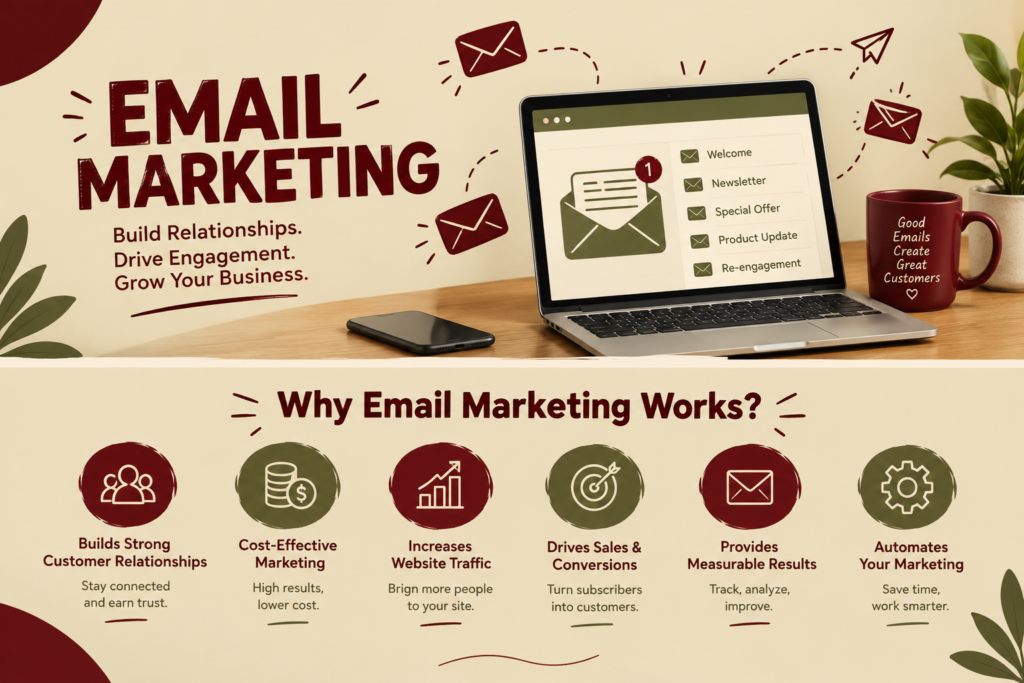
What Is Email Marketing?
Email marketing is a digital marketing technique that involves sending emails to subscribers and potential customers to promote products, share information, announce offers, and build customer loyalty.
Unlike many other marketing channels, email marketing gives businesses a direct way to communicate with people who have chosen to receive their messages.
Benefits of Email Marketing
1.Builds Strong Customer Relationships
Regular newsletters and useful updates help businesses stay connected with their audience and build long-term trust.
2.Cost-Effective Marketing
Email marketing can be an affordable way to promote products and services without the high costs associated with some traditional advertising methods.
3.Increases Website Traffic
Including relevant links in your emails encourages subscribers to visit your website, explore your services, and read your latest blog posts.
4.Drives Sales and Conversions
Personalized product recommendations, special offers, and abandoned-cart reminders can encourage customers to take action.
5.Provides Measurable Results
Email marketing platforms can track important metrics such as delivery rates, clicks, conversions, and unsubscribes, helping businesses improve future campaigns.
Types of Email Marketing Campaigns
Welcome Emails: Introduce your brand to new subscribers.
Newsletter Emails: Share helpful content, news, and updates.
Promotional Emails: Highlight special offers, discounts, and new products.
Product Update Emails: Inform customers about new features or services.
Re-engagement Emails: Encourage inactive subscribers to reconnect with your brand.
Automated Emails: Send timely messages based on subscriber actions or preferences.

Best Practices for Successful Email Marketing
> Create Engaging Subject Lines
Write clear, relevant subject lines that encourage subscribers to open your emails without misleading them.
> Personalize Your Messages
Use subscriber preferences and relevant information to make your content more useful and engaging.
> Optimize for Mobile Devices
Make sure your emails are easy to read on smartphones, with clear text, responsive layouts, and easy-to-tap buttons.
> Include a Clear Call to Action
Guide readers toward one primary action, such as visiting your website, exploring a service, or making a purchase
> Segment Your Email List
Group subscribers based on their interests, preferences, or customer journey so you can send more relevant messages.
> Monitor Campaign Performance
Review clicks, conversions, unsubscribes, and other relevant metrics to understand what works best for your audience.
Common Email Marketing Mistakes to Avoid
Sending too many emails.
Using misleading subject lines.
Sending irrelevant or generic content.
Ignoring mobile users.
Purchasing email lists without permission.
Failing to provide a clear unsubscribe option.
Ignoring email marketing laws and subscriber consent.
Avoiding these mistakes helps create a better subscriber experience and supports long-term campaign performance.
How Email Marketing Helps Your Business Grow
Email marketing supports business growth by nurturing leads, maintaining customer relationships, promoting valuable content, and encouraging repeat purchases. When combined with SEO, social media marketing, and a well-designed website, it can become an important part of a complete digital marketing strategy.
The key is to focus on delivering value rather than simply sending promotional messages.
Conclusion
Email marketing remains a valuable tool for businesses that want to connect with their audience, increase website traffic, and improve conversions. By creating useful content, personalizing campaigns, and measuring performance, businesses can build meaningful customer relationships and support sustainable growth.